
Stewart County Municipal Court Warrants
A Stewart County municipal warrant always traces back to a city case. The Lumpkin and Richland courts hear city ordinance violations, traffic charges, and preliminary proceedings. Miss a court date there and the failure-to-appear warrant normally stays with that city rather than moving to Superior Court. Officials use plain words for it. Locals say bench warrant or failure-to-appear warrant. No Stewart County source uses capias. The issuing court decides everything that follows. It sets the next court date, and it alone can recall the warrant, pulling it out of active enforcement. Sheriff's deputies may serve that city process anywhere in the county. But they cannot overrule the municipal judge. A docket search alone never proves a Stewart County warrant is still enforceable, since only the court can confirm that.
Two Stewart Municipal Warrant Routes
Stewart County has only two incorporated cities. The 2020 Census incorporated-place table lists Richland and Lumpkin. Each has its own city-government contact path. A municipal warrant inquiry should not merge their files or assume one city clerk keeps the other city’s court records.
The official Census source is also preserved in this image of the incorporated-place table.
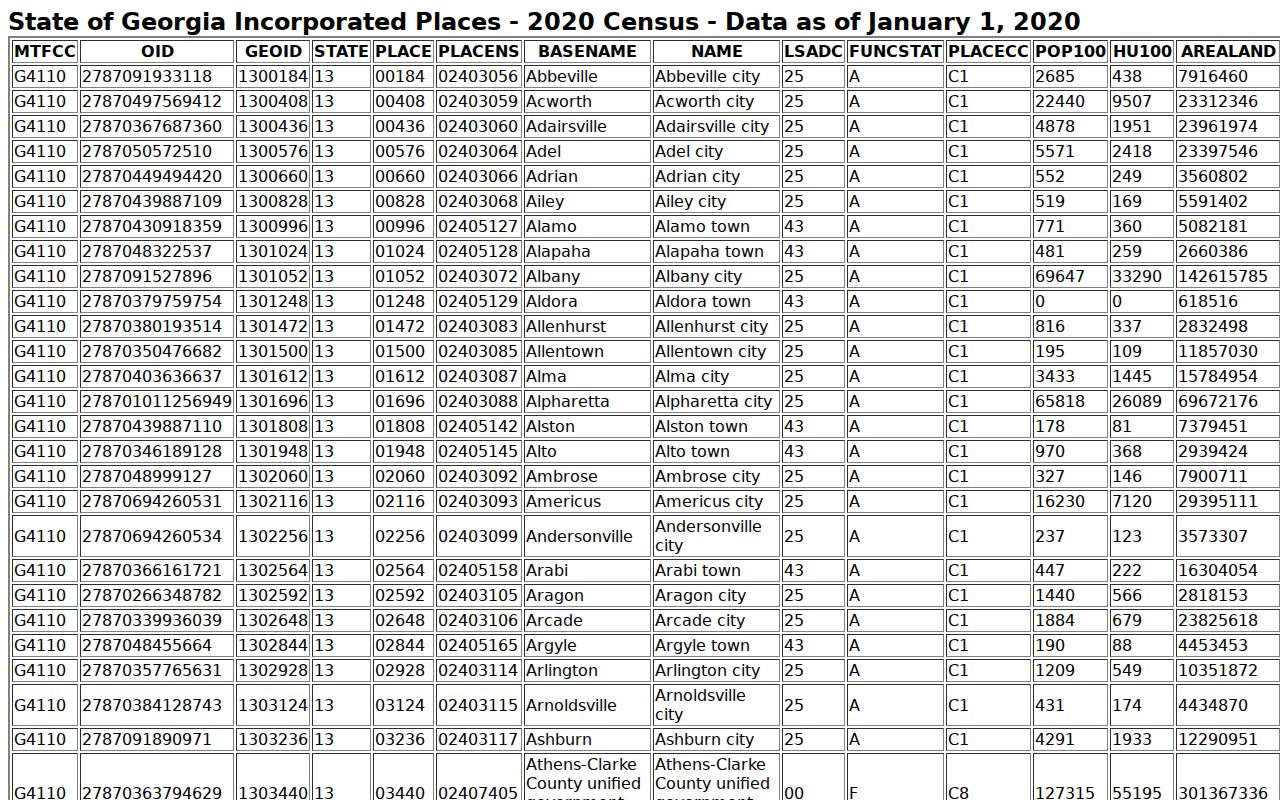
Lumpkin also serves as the county seat. Even so, its city warrant route is separate from the county courthouse offices. Richland keeps its own contacts for city hall and police. Omaha and Louvale are communities, not extra municipal courts. Where you live does not settle which court holds your case. The court printed on the ticket, notice, or case paper is the real first clue in Stewart County.
Stewart County Cities With Municipal Courts
The Lumpkin employee directory names Teresa Davis as city court clerk and Matthew K. Holloway as police chief. Call 229-838-4333. The city office sits at 552 MLK Jr. Drive, P.O. Box 278, Lumpkin, Georgia 31815. Assignments change, so confirm the clerk and her hours before visiting this Stewart County office.
| City | Municipal route | Warrant-related matters | Published phone |
|---|---|---|---|
| Lumpkin | City court clerk | City traffic, ordinance, FTA | 229-838-4333 |
| Richland | City clerk or police | City traffic, ordinance, FTA | 229-887-3323; police 229-887-3530 |
Richland's official services page posts the police non-emergency number. That page, not a warrant list, is the city's public starting point in Stewart County.
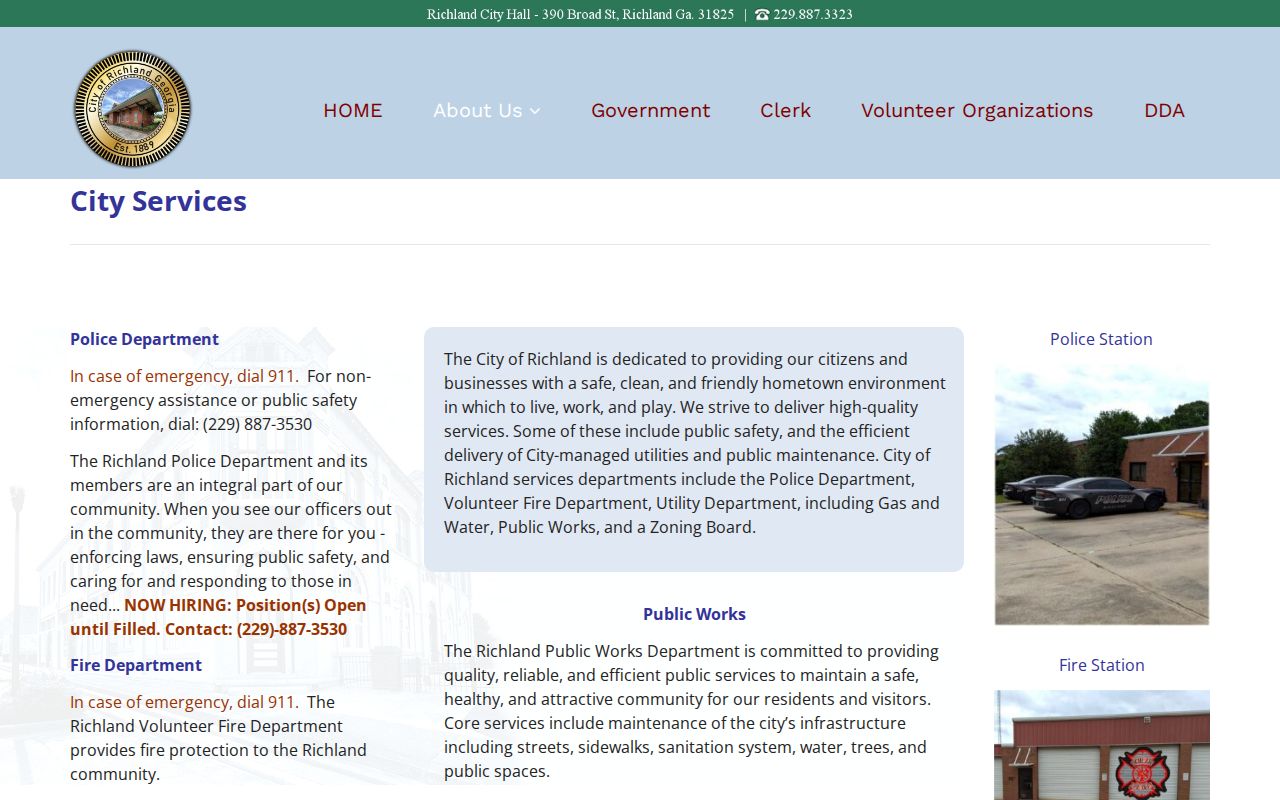
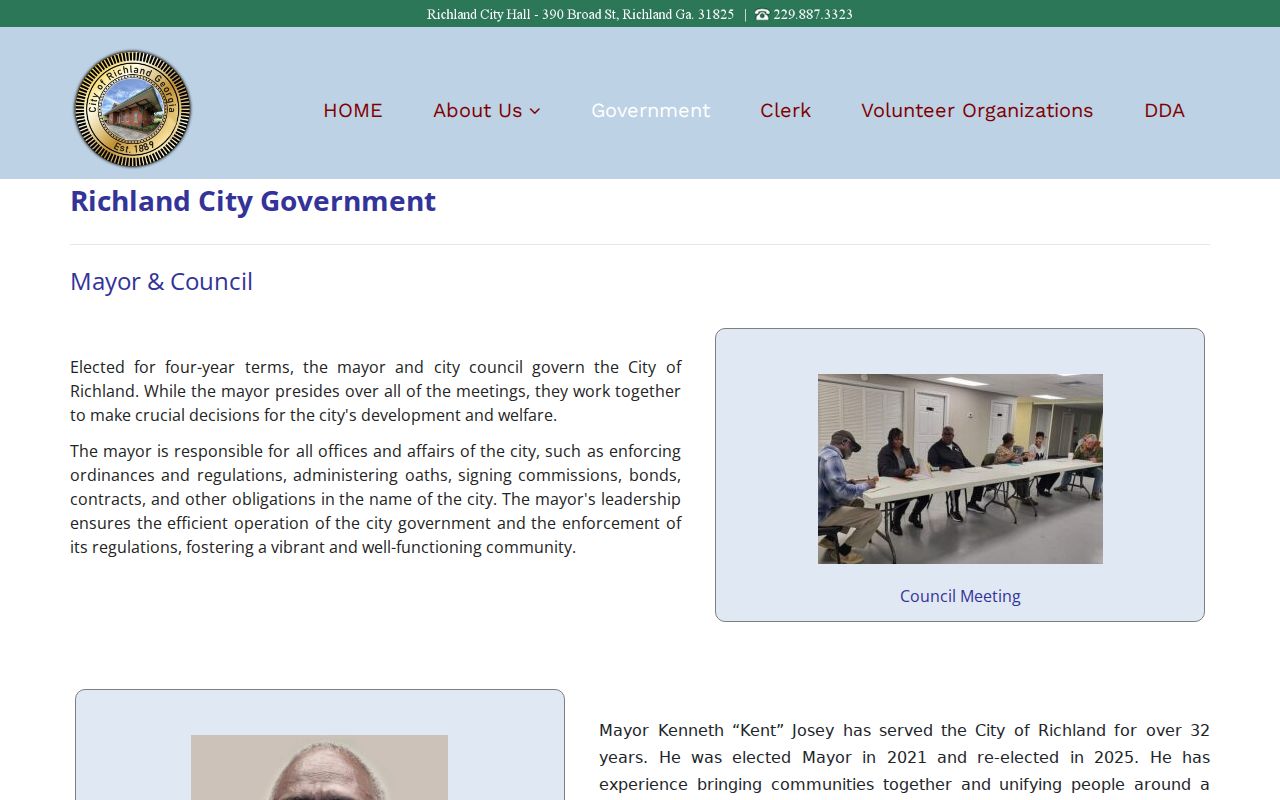
That number routes you to police, nothing more. The Richland government page adds wider Stewart County city-government context.
The clerk's contact page lists 390 Broad Street as the address. Hours are 8 a.m. to 4 p.m., weekdays. Call first. These contacts point you to the right Stewart County office, though staff will still need solid identifiers before discussing any warrant status.
No Stewart Municipal Warrant Portal
Neither Stewart County city publishes an online warrant search. That gap limits online access; it does not prove no warrant exists. Use the phone and records channels instead. A blank screen never counts as clearance. One Richland page trips people up. The Richland GovernmentWindow page looks like a warrant tool, but its official landing page is about something else.
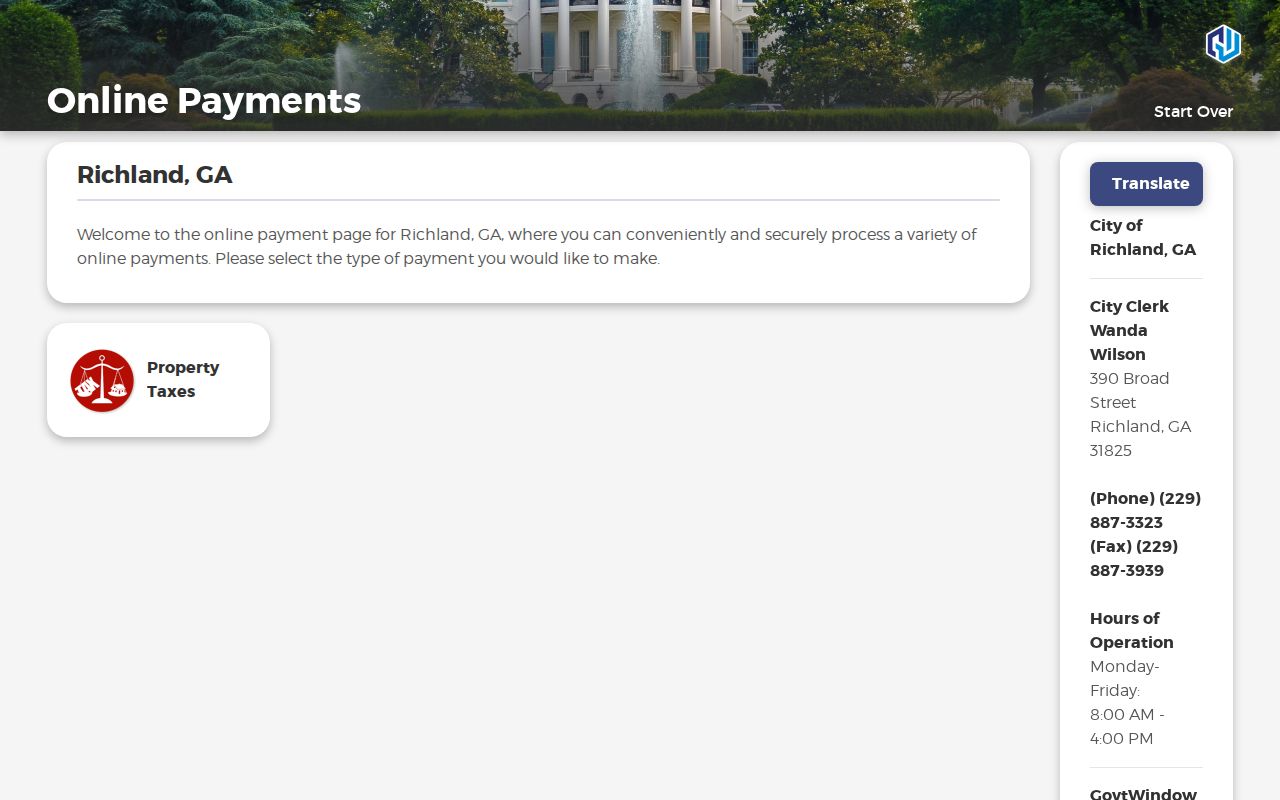
That service handles property-tax payments. It is not a citation lookup or warrant list. PeachCourt can pull some Superior Court filings in Stewart County, yet it cannot certify current city warrant status.
Quick answer: Ask the issuing city clerk first, then use the Sheriff’s official line when the city cannot confirm whether process remains active.
Checking a Municipal Court Warrant
Start with the court line on your ticket or notice. Gather the full name, birth date, and citation or case number. Georgia's official warrant instructions recommend giving a name and date of birth when you contact the sheriff about a Stewart County warrant.
- Read the citation or notice and identify Lumpkin, Richland, Magistrate, Probate, or Superior Court.
- Call the named municipal clerk and ask whether the case has an active failure-to-appear or bench warrant.
- Use the city police non-emergency number if the clerk directs warrant confirmation there.
- Call the Stewart County Sheriff at 229-838-4311 or 229-838-4393 for countywide confirmation.
- For a nonurgent copy, identify the custodian and make a narrow written Open Records request.
Georgia cautions that walking into a sheriff's office with an active warrant can mean immediate custody. Talk to a lawyer first. No public statewide warrant-search system exists. GCIC and the Criminal Case Data Exchange serve justice agencies, not public name lookups, so a Stewart County check still runs through the local court or sheriff.
Stewart City and County Warrants Differ
A municipal court is not the Magistrate Court or the Superior Court of Stewart County. Magistrate Court takes warrant applications and preliminary criminal work. Superior Court holds broad felony jurisdiction, and Mona Dudley, Clerk of Superior Court, keeps its filed records, while Probate Court and juvenile matters, which carry added confidentiality, sit elsewhere. Match the right Stewart County court before you call.
| Question | Best first contact | Why |
|---|---|---|
| City ticket or ordinance | Named municipal clerk | The city owns its case route |
| Warrant application | Stewart Magistrate Court | Magistrates issue warrants and hold preliminary proceedings |
| Felony case document | Superior Court Clerk | The clerk keeps filed Superior records |
| Executable status | Issuing court and Sheriff | Status may change after a document was filed |
The Stewart County directory works as a routing map. It gathers Superior, Magistrate, Probate, sheriff, and city contacts in one place. That beats guessing from a home address.
Inside a Municipal Court Warrant
A city clerk can confirm fields no website shows. Ask for the issuing court, the current status, and the required next step, and treat any dollar figure as provisional. Stewart County publishes no complete municipal warrant-clearance fee schedule.
| Warrant or case number | The court identifier, shown here only as CITY-CASE-NUMBER; no fixed Stewart format was published. |
|---|---|
| Charge | The traffic, ordinance, or failure-to-appear basis. |
| Issuing court | Lumpkin or Richland municipal court, or a county court if the first assumption was wrong. |
| Dates | Issue, court, service, recall, and disposition dates when releasable. |
| Status | Active, served, recalled, quashed, or disposed. Quashed means set aside by the court. |
| Amount | Fine or bond information only as the court currently confirms it. |
A name match alone proves little in Stewart County. Add a birth date plus a case or citation number so a warrant check does not catch the wrong person.
Stewart Traffic FTA Warrant Sequence
The Georgia Uniform Traffic Citation is a useful routing tool. It lists the court, the appearance date, and the charge, and it carries boxes for warrant issued, warrant served, and court action. Those fields help a Stewart County reader figure out where a failure-to-appear case now sits. What they do not create is a public Stewart municipal warrant portal. The ticket routes you; it is not a warrant lookup system. A missed court date in Stewart County can also reach your driver's license. Under the Georgia DDS FTA explanation, a suspension takes effect 28 calendar days after DDS gets notice of the failure to appear. Court release and DDS processing are two separate tracks. Fixing the license does not clear every active warrant, and paying a city bill does not by itself recall a bench warrant. Only the issuing court can confirm that a warrant is gone.
Process: missed city date › court FTA action › possible warrant and DDS notice › court disposition › written recall or release confirmation.
Note: Always ask both the municipal court and DDS which step remains open.
How to Resolve a Municipal Court Warrant
Resolution starts with the city court that issued the warrant. Ask that Stewart County court what it allows: a reset, an appearance, bond, payment, or a motion filed through counsel. A bond addresses custody while the case keeps going. It does not erase the charge. Skip any unofficial service promising instant warrant clearance.
- Confirm the city, case number, charge, and present warrant status.
- Ask the court or counsel about its appearance, reset, bond, or recall procedure.
- Complete only the step approved by the issuing court.
- Keep the receipt, disposition, or signed order.
- Request written proof that the warrant was recalled or otherwise resolved.
- For a traffic FTA, verify court release and later DDS processing.
Warning: Do not appear at a police or sheriff office without understanding that an active warrant can lead to immediate custody.
The Stewart Sheriff FAQ says a person in custody may get bond at once or within 72 hours, depending on the charge. Bonding agents and property bonds are both possible routes in Stewart County. The FAQ does not guarantee eligibility, set every fee, or recall a city warrant. That power stays with the issuing court.
Stewart Municipal Warrant Record Requests
Want the paper trail rather than an urgent status check? The county Open Records form shows what a focused request looks like. Give a date range, a case or citation number, the city court, and the fields you want. Say whether you wish to inspect the records or get copies, and ask for a fee estimate. Confirm the city's own custodian and fee terms first. Do not route city records work to the county by default. The Georgia Open Records Act, O.C.G.A. §§ 50-18-70 through 50-18-76, backs access to public records but permits exemptions. Pending investigations, confidential sources, sealed records, and juvenile information may all be withheld. The Attorney General's Open Government FAQ lays out the usual three-business-day response framework and says an agency should cite the legal basis for anything it withholds. One caution belongs here. A records response is not live warrant confirmation, and status can change after a copy is made. Check current process with the issuing court or the Sheriff, then keep your court proof once the warrant records are resolved.